
Sometimes a tooth needs to be extracted. It’s a common procedure and it can have multiple causes.
A dentist may, for example, extract a tooth to make room for others to grow into — in the right context, it can help straighten your smile or it can make room for the eruption of a new tooth. Dental infection, or the risk of infection, may also give cause for a tooth extraction. Of course, sometimes our teeth just outright break when we hit them, whether it was playing football, getting into a bar fight, or just a plain ol’ mistake.
Or maybe your smile looks something like this:
Damaged and infected teeth hurt. Not only that, they raise the risk for future dental and overall health issues, including gum disease, tooth decay, and even heart disease.
Knowing that, it makes a lot sense to extract at-risk teeth.
What’s the best way of pulling a tooth? Let’s go over some of the options.
Keep in mind that I don’t recommend most of these. In fact, some of these are really, really bad ideas. By the end of this, I hope you see why the help of a dentist makes a lot of sense.
The Classic ‘String & Door’ Approach
When you were kid one of your baby teeth was came loose and your parents probably jokingly suggested using a piece of string and the bathroom door to take care of it. Well, hopefully your parents were joking! If not, keep reading, because there’s a better way to do it that you should know about.
What’s the ‘string and door’ tactic all about?
It’s straightforward:
- Cut a piece a string that’s about a foot and a half long.
- Tie one end to the tooth you want to extract.
- Tie the other end to the inside knob of an open door.
- Stand far enough away from the door for there to be some tension in that string, as if you walked back one more step it’d yank out that tooth.
- The good news is that you don’t have to take that one step back…
- …because as soon as you’re positioned in the right spot, one of your family members or buddies will smack that door shut without enough force that it pulls the loose tooth straight out of its socket!

Exciting stuff, huh?
“Would you ever do this, Dr. Kovacevic? Is this a legitimate method?” No and, my recommendation, no.
“But I’m saving so much money!” you quip.
Here’s the problem with the ‘string and door’ method:
What if your tooth is infected and that’s the reason you’re losing it? By extracting the tooth at home, you’re running a high risk of making that infection worse, because now you have an open wound and a hole — we’re talking an immediate and long-term risk factor increase.
You also run the risk of damaging the tooth even more, so that you only really extract part of it and not the root. Ouch! Imagine how much more difficult and painful it will be when a dentist fixes that mistake.
One more: imagine how much more of a headache — both literally and financially — it would be to damage adjacent teeth.
Chances are that the ‘string and door’ method is not going to save you any money. It’s going to cost you a lot more.
The Dangerous ‘I Have Pliers!’ Approach
One day I was talking to a patient after his hygiene appointment and he told me a really funny story. Luckily, he gave me permission to tell you.
He noticed a sharp pain in his back every time he would scratch over a specific area and for a long while he thought it was a simple pimple, until it persisted and one day he took a look at it. Turns out he had a big purple boil. Gross, right?
It gets worse.
Actually, I’ll spare you the gory details.
Long story short, he has a few friends over and one of them says, “Hey Jon, you know what’d be a great idea? It might even save you a few bucks! I’ll tell you what. Bring me a sowing needle and some alcohol and we’ll lance that baby right off!”
Bad idea, as it turns out. One word, three times: infection, infection, infection!
If you don’t do it right, and chances are that unless you don’t have the ample and needed experience in battlefield or survival medicine to get it right the first time (hey, it’s no insult — I’m in the same boat!), you a run a very, very high risk of spreading the infection that caused the boil in the first place. And, again, it’s usually more painful and more costly when a doctor needs to repair self-imposed damage because you decided to test the ‘do it yourself’ route first.
“We’re talking teeth, not boils, doc.”
The two, believe it or not, are related.
You might suffer from a tooth ache. One of your teeth is coming loose. Your friend has the bright idea of using pliers to pull out. “Great!” you think. “That’ll save money.”

Oy vey! No, please no! Just like with the boil and the ‘string and door’method, you’re putting your oral health at risk by increasing the chance of spreading the infection. Not only that, but you’re denying yourself the opportunity of having the underlying cause of your tooth loss treated.
Not to mention, what if that tooth was actually salvageable? Oops.
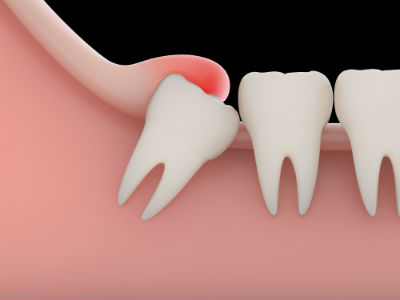
Or, what if the tooth is impacted and you end up ripping it out of your gums, causing a big mess that’s going to require you to pay a lot of money to schedule an emergency appointment with your dentist? No bueno.
What good is doing it yourself if it’s just going to cause bigger problems for you?
Put aside the anecdotal data — maybe your friend pulled his own tooth out and is fine (as far as you know, at least) — and think averages. Chances are doing it yourself is going to be more painful, more expensive over the long-run, and a much bigger pain in the neck than going the good ‘ol traditional route.
So, what is this traditional route?
The Time-Tested ‘See a Dentist’ Approach
I know, I know, boring right? Trust me, it’s better that way.
Save yourself time, money, and your sanity by just getting your tooth extracted by a dentist.
It’s a relatively simple procedure and there are so many added benefits, like:
- Local anesthesia
- An actual professional who can tell you what is going on and what your options are
- Treatment of the infection (always a good thing, right?)
- The right tools to deal with tooth problems of all kinds
- A much, much lower likelihood of post-extraction health complications
All of these are big plusses, and you’ll feel them — that isn’t a metaphor with some deeper meaning. It will literally feel better to have your tooth extracted by a dentist.
Think about it, we can approach a tooth in different ways depending on its status. Sometimes teeth are too fragile to pull them out in one piece, so we have to break them up and remove them little by little. Other times most of the tooth might be sitting beneath the gumline; a dentist will gently move some of this tissue out of the way, as to avoid simply yanking it right through the gums.
There are so many factors that ‘do it at home’ solutions aren’t equipped to handle or even consider. We end up seeing a lot of patients who try taking a tooth out themselves coming in for an emergency consultation — and these are expensive mistakes.
Save yourself some money and do it right the first time. Have your tooth extracted by a dentist.


Why did I become a dentist? What makes me wake up in the morning?
It's hard to answer this question and not sound cheesy, but the truth is that there is something special about the way a patient smiles at you after looking at their new crown or their new veneer, or even after a simple cleaning. There's a gleam of confidence and awareness in their eyes, and it's absolutely magical. That's why I'm a dentist.
It's hard to answer this question and not sound cheesy, but the truth is that there is something special about the way a patient smiles at you after looking at their new crown or their new veneer, or even after a simple cleaning. There's a gleam of confidence and awareness in their eyes, and it's absolutely magical. That's why I'm a dentist.